
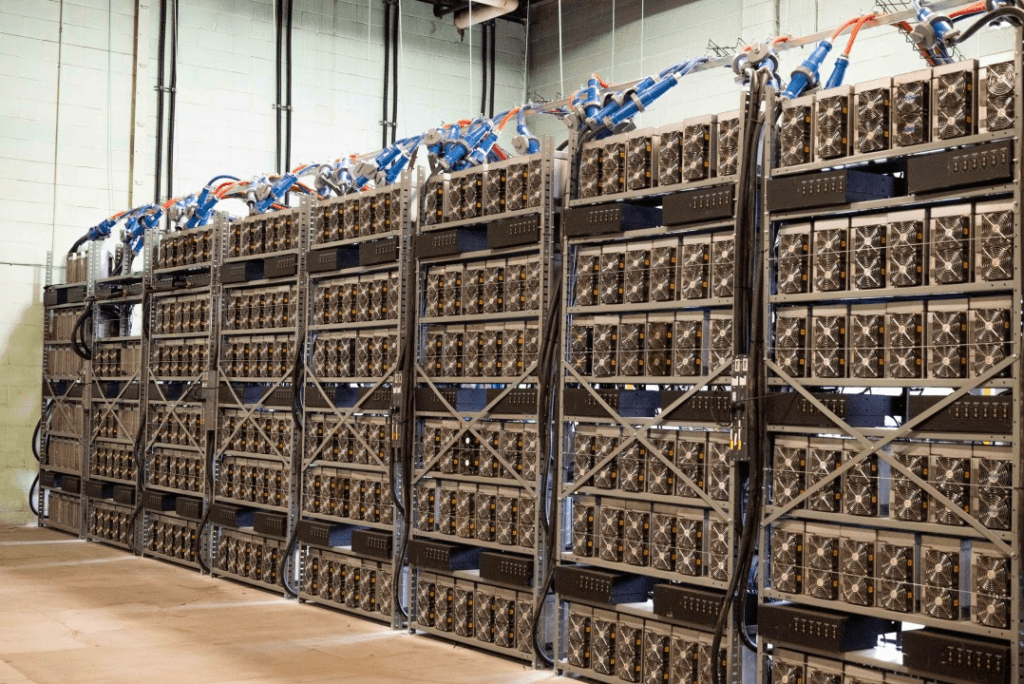
A bitcoin mining machine is a specialised piece of hardware designed to secure the Bitcoin network and earn rewards by validating transactions. Unlike general-purpose computers, modern mining machines are built specifically for one task: performing the cryptographic calculations required for Bitcoin mining as efficiently as possible.
This guide explains what a bitcoin mining machine is, how it works, the different types available, costs involved, performance factors, electricity considerations, and realistic expectations for users in the US and UK.
What Is a Bitcoin Mining Machine
A bitcoin mining machine is hardware that runs the SHA-256 hashing algorithm used by the Bitcoin network. Its purpose is to compete with other miners to solve complex mathematical problems. When a problem is solved, a new block is added to the blockchain, and the miner receives a block reward and transaction fees.
In the early days of Bitcoin, mining could be done using standard computers. Today, mining requires powerful, energy-efficient machines designed exclusively for this process.
How a Bitcoin Mining Machine Works
Bitcoin mining machines perform trillions of calculations per second. These calculations attempt to find a hash value that meets the network’s difficulty target.
The process works as follows:
Transactions are grouped into a block
The mining machine calculates hashes repeatedly
When a valid hash is found, the block is verified
The miner earns a reward for contributing to network security
The higher the machine’s processing power, the greater its chance of earning rewards.
Types of Bitcoin Mining Machines
Bitcoin mining hardware has evolved through several stages.
CPU Mining
Mining with a computer processor. This method is no longer viable due to extremely low efficiency.
GPU Mining
Using graphics cards to mine. GPUs are still used for some cryptocurrencies but are not practical for Bitcoin mining today.
ASIC Mining Machines
Application-Specific Integrated Circuit machines are designed solely for Bitcoin mining. These are the only realistic option for modern Bitcoin mining.
ASIC miners dominate the global mining industry because they deliver far higher performance with lower energy consumption per calculation.
What Is an ASIC Bitcoin Mining Machine
An ASIC bitcoin mining machine is purpose-built hardware optimised for the SHA-256 algorithm. It cannot be repurposed for general computing or gaming.
Key Characteristics of ASIC Miners
Extremely high hash rate
High power consumption
Single-use functionality
Long operational lifespan if well maintained
Most professional mining operations use large numbers of ASIC machines in dedicated facilities.
Key Performance Metrics of a Bitcoin Mining Machine
When evaluating a bitcoin mining machine, several technical specifications matter.
Hash Rate
Measured in terahashes per second (TH/s). A higher hash rate means more calculations per second and higher mining potential.
Power Consumption
Measured in watts (W). Mining machines consume large amounts of electricity, making energy cost a critical factor.
Energy Efficiency
Measured as watts per terahash (W/TH). Lower values indicate better efficiency.
Noise Level
Most ASIC miners produce significant noise and are not suitable for residential use without sound control.
Cost of a Bitcoin Mining Machine
The price of a bitcoin mining machine depends on performance, efficiency, and market demand.
Typical Cost Range
Entry-level ASIC miners: lower performance, lower cost
High-performance ASIC miners: significantly higher cost
Prices fluctuate based on:
Bitcoin market conditions
Supply and demand
New hardware releases
In the US and UK, import taxes, shipping, and customs duties can also affect total cost.
Electricity Requirements and Operating Costs
Electricity is the largest ongoing expense in Bitcoin mining.
Why Electricity Matters
Mining machines run 24/7
High power draw leads to substantial monthly bills
Profitability depends heavily on electricity rates
Electricity costs in the UK are generally higher than in many US regions, making home mining less competitive without special arrangements.
Cooling and Environmental Considerations
Bitcoin mining machines generate a large amount of heat.
Cooling Requirements
High airflow
Industrial fans or ventilation systems
Temperature control to prevent hardware damage
Improper cooling reduces machine lifespan and increases failure risk.
Mining at Home vs Mining Facilities
Home Mining
Limited by noise, heat, and electricity cost
Suitable only for experimental or educational purposes
Professional Mining Facilities
Optimised power pricing
Advanced cooling systems
Scalable infrastructure
Most profitable mining operations are located in industrial settings rather than homes.
Bitcoin Mining Difficulty and Competition
Mining difficulty adjusts automatically to maintain consistent block production.
What This Means
As more miners join, difficulty increases
Individual machines earn smaller shares over time
Hardware becomes obsolete faster
This makes mining a highly competitive activity that favours scale and efficiency.
Profitability of a Bitcoin Mining Machine
Profitability depends on multiple variables:
Machine hash rate
Energy efficiency
Electricity cost
Bitcoin price
Network difficulty
A profitable setup today may become unprofitable if conditions change. Many miners treat mining as a long-term infrastructure investment rather than guaranteed income.
Bitcoin Halving and Its Impact on Mining Machines
Bitcoin rewards are reduced approximately every four years.
Effects of Halving
Lower rewards per block
Increased pressure on inefficient machines
Greater importance of low electricity costs
After each halving event, less efficient mining machines often become unprofitable.
Maintenance and Lifespan of Mining Machines
ASIC miners are designed for continuous operation.
Maintenance Considerations
Dust removal
Fan replacement
Monitoring temperature and power stability
With proper maintenance, a bitcoin mining machine can operate for several years, though newer models may outperform older ones quickly.
Legal and Regulatory Considerations
Bitcoin mining legality varies by region.
US and UK Context
Mining is legal
Subject to electricity regulations and taxation
Business-scale operations may require permits
Anyone considering mining should understand local energy regulations and tax obligations.
Environmental Impact of Bitcoin Mining Machines
Bitcoin mining has raised environmental concerns due to energy consumption.
Key Points
Energy source matters more than energy use alone
Renewable-powered mining reduces impact
Efficiency improvements continue over time
Many modern mining operations aim to use cleaner or excess energy sources.
Is a Bitcoin Mining Machine Worth It
A bitcoin mining machine can be worthwhile if:
Electricity costs are low
Cooling is properly managed
Hardware is efficient
Expectations are realistic
For many individuals in the US and UK, mining is more suitable as a technical interest or long-term infrastructure project rather than a quick income method.
Alternatives to Owning a Mining Machine
Some users choose alternatives instead of running hardware.
Common Alternatives
Mining pools participation
Hosting services at mining facilities
Indirect exposure through blockchain infrastructure
Each alternative has different risk and cost profiles.
Final Thoughts on Bitcoin Mining Machines
A bitcoin mining machine is a highly specialised device at the heart of the Bitcoin network. While it plays a crucial role in securing transactions and maintaining decentralisation, successful mining requires careful planning, technical understanding, and cost control.
Bitcoin mining is no longer a casual activity. It is an industrial-scale operation where efficiency, electricity pricing, and long-term strategy determine success. For those who understand the risks and costs, a bitcoin mining machine can be a powerful tool. For others, it serves as a valuable learning platform for understanding blockchain technology and digital infrastructure.