
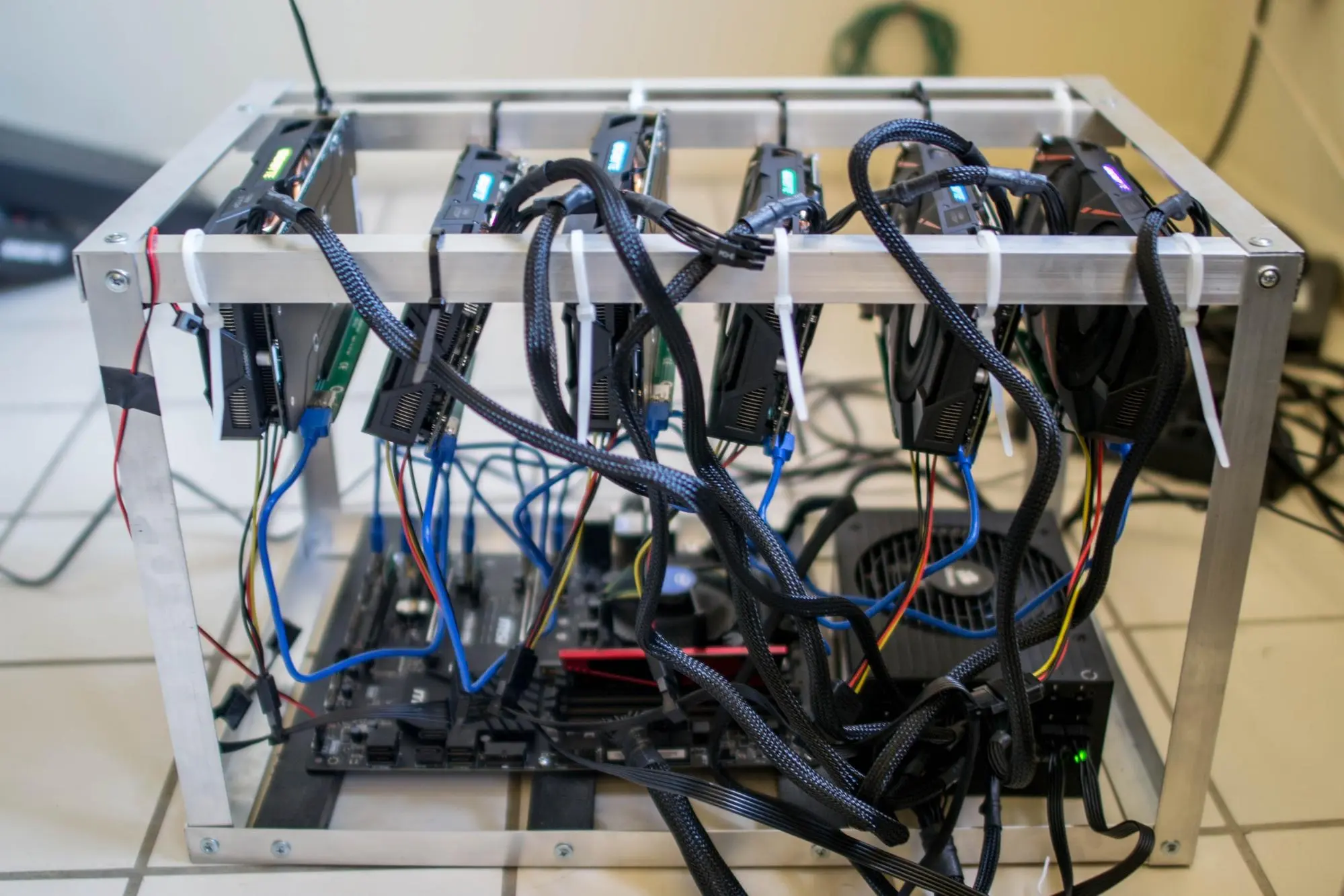
A mining rig cryptocurrency setup refers to a computer system specifically built to mine cryptocurrencies by validating transactions and securing blockchain networks. Unlike standard desktop computers, mining rigs are optimised for continuous high-performance computation, energy efficiency, and thermal management.
This guide explains what a cryptocurrency mining rig is, how it works, the hardware involved, setup considerations, operating costs, and realistic expectations for miners in the US and UK.
What Is a Cryptocurrency Mining Rig
A cryptocurrency mining rig is a combination of hardware components assembled to perform cryptographic calculations required by blockchain networks. These calculations help verify transactions and add new blocks to the blockchain. In return, miners receive cryptocurrency rewards.
Mining rigs are most commonly used for cryptocurrencies that support GPU-based mining, though some blockchains require specialised hardware.
How a Mining Rig Works
A mining rig runs mining software that connects to a blockchain network or mining pool. The system performs mathematical calculations repeatedly to solve cryptographic problems.
The process involves:
Receiving transaction data from the network
Performing hash calculations
Submitting valid solutions
Receiving rewards based on contributed computing power
The more powerful and efficient the rig, the higher its contribution to the network.
Types of Cryptocurrency Mining Rigs
Mining rigs vary based on hardware and the cryptocurrency being mined.
CPU Mining Rigs
Use computer processors. These are generally inefficient for most modern cryptocurrencies and are rarely used today.
GPU Mining Rigs
Use graphics cards and are the most common type of cryptocurrency mining rig. They offer flexibility and can mine multiple cryptocurrencies.
ASIC Mining Rigs
Use specialised chips designed for specific algorithms. These are not flexible but deliver extremely high performance for supported cryptocurrencies.
GPU rigs are often preferred by individuals because they can be repurposed or resold more easily.
Core Components of a Cryptocurrency Mining Rig
A mining rig cryptocurrency setup includes several key components.
Graphics Processing Units
GPUs are the primary source of mining power. Performance varies significantly by model and algorithm.
Motherboard
Mining motherboards support multiple GPUs simultaneously and provide stable power distribution.
Processor
The CPU supports system operations but does not handle most mining calculations.
Power Supply Units
High-quality power supplies are essential to handle continuous high loads safely.
RAM and Storage
Minimal memory and storage are required, as mining software is lightweight.
Frame or Chassis
Open-air frames improve airflow and simplify maintenance.
Popular Cryptocurrencies Mined with Rigs
Cryptocurrency mining rigs are commonly used for:
GPU-friendly blockchains
Coins that resist ASIC dominance
Networks with active mining communities
The specific cryptocurrency mined often changes as network difficulty and profitability fluctuate.
Mining Software and Configuration
Mining software connects the rig to the blockchain or mining pool.
Key Software Functions
Optimises GPU performance
Manages temperature and power usage
Reports performance metrics
Handles payouts from mining pools
Proper configuration can significantly impact efficiency and stability.
Mining Pools vs Solo Mining
Mining Pools
Most miners join pools to combine computing power and receive consistent rewards.
Solo Mining
Requires substantial computing power and is generally impractical for individual miners.
For most users, mining pools provide predictable returns and reduced variance.
Electricity Usage and Power Costs
Electricity is the largest ongoing cost for a mining rig cryptocurrency setup.
Why Power Cost Matters
Mining rigs operate continuously
High energy usage directly affects profitability
Electricity rates vary widely by location
In the UK, electricity costs are typically higher than in many US regions, making efficiency especially important.
Cooling and Heat Management
Mining rigs generate significant heat.
Cooling Strategies
High airflow environments
Multiple case or external fans
Ambient temperature control
Poor cooling reduces performance and shortens hardware lifespan.
Noise Considerations
GPU mining rigs can be noisy due to multiple fans operating at high speeds.
Noise Management
Dedicated rooms or enclosures
Sound-dampening solutions
Avoiding residential shared spaces
Noise is a key factor for home-based mining setups.
Initial Cost of a Mining Rig
The cost of building a mining rig depends on hardware choices.
Cost Factors
Number and type of GPUs
Power supply capacity
Cooling infrastructure
Local availability and pricing
Market demand and cryptocurrency prices can significantly affect hardware costs.
Profitability of Cryptocurrency Mining Rigs
Profitability depends on multiple variables:
Cryptocurrency market price
Network difficulty
Power efficiency
Electricity cost
Hardware lifespan
Mining profitability can change rapidly, and results are not guaranteed.
Maintenance and Long-Term Operation
Mining rigs require regular maintenance.
Maintenance Tasks
Cleaning dust buildup
Monitoring temperatures
Replacing worn fans
Updating software
Well-maintained rigs last longer and operate more efficiently.
Legal and Regulatory Considerations
Cryptocurrency mining is legal in the US and UK but may be subject to:
Electricity usage regulations
Noise and zoning rules
Taxation on mining rewards
Large-scale operations may require additional compliance measures.
Environmental Impact
Mining rigs consume energy, which raises environmental concerns.
Key Considerations
Energy source plays a major role
Renewable-powered mining reduces impact
Efficiency improvements lower energy waste
Some miners actively seek cleaner energy options.
Is a Cryptocurrency Mining Rig Worth It
A mining rig cryptocurrency setup may be worthwhile if:
Electricity costs are manageable
Hardware is efficient
Cooling and noise are controlled
Expectations are realistic
For many individuals, mining is best viewed as a technical hobby or long-term infrastructure investment rather than guaranteed income.
Alternatives to Building a Mining Rig
Those not wishing to manage hardware may consider:
Hosted mining services
Mining pool participation through rented power
Learning blockchain technology without mining
Each option has different risks and cost structures.
Final Thoughts on Cryptocurrency Mining Rigs
A mining rig cryptocurrency system is a powerful tool for participating directly in blockchain networks. While mining can be technically rewarding, it requires careful planning, ongoing maintenance, and cost awareness.
Cryptocurrency mining has evolved from a casual activity into a competitive, efficiency-driven process. Success depends on understanding hardware, energy costs, and long-term strategy. For those prepared to manage these factors, a mining rig can provide both learning opportunities and potential rewards.