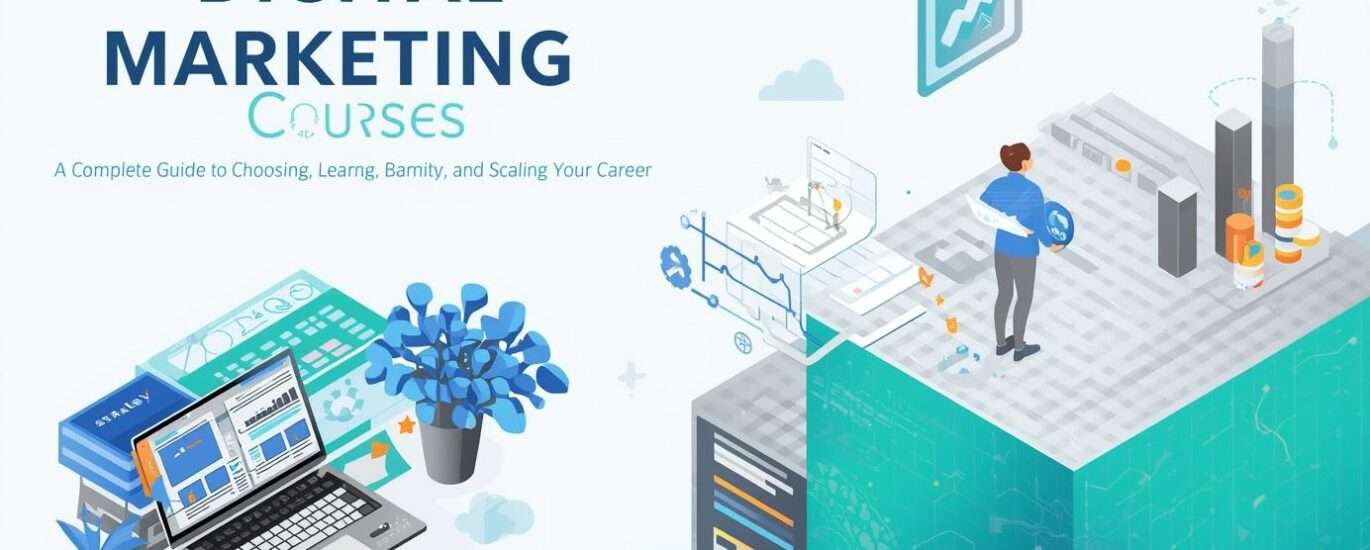
Digital marketing is one of the most in-demand skill sets in today’s economy. However, the real challenge is not just learning digital marketing—it’s choosing the right learning path and executing it strategically. A well-planned strategy digital marketing courses approach helps you avoid confusion, build real skills, and create a scalable career or business.
This guide provides a complete system—from beginner to advanced—covering course selection, learning frameworks, tools, practical execution, and long-term growth strategies.
What is Strategy Digital Marketing Courses?
A strategy digital marketing courses approach is not just about enrolling in random programs. It is a structured system where you:
- Choose the right courses based on goals
- Learn skills in a logical sequence
- Apply knowledge through real projects
- Build a portfolio and income streams
Instead of consuming content passively, you build practical expertise.
Why Most People Fail in Digital Marketing Learning
Before building your strategy, it’s important to understand common mistakes.
Learning Without Direction
Jumping between courses without a roadmap leads to confusion.
No Practical Implementation
Watching tutorials without applying them results in zero skill.
Tool Overload
Trying too many tools without mastering basics.
Unrealistic Expectations
Digital marketing requires time, testing, and iteration.
The Core Framework of Strategy Digital Marketing Courses
A successful strategy digital marketing courses system is built on five stages:
- Foundation Learning
- Skill Specialization
- Tool Mastery
- Real-World Application
- Scaling & Monetization
Stage 1: Foundation Learning
Start with core digital marketing concepts.
Topics to Learn
- SEO fundamentals
- Content marketing
- Social media basics
- Paid advertising introduction
- Email marketing
Best Beginner Platforms
Why Foundation Matters
Without fundamentals, advanced strategies won’t work.
To understand how digital systems connect with growth, this is explained in Tools Startup Growth Strategy where systems and tools are structured for scalability.
Stage 2: Skill Specialization
After basics, choose a specialization.
Popular Digital Marketing Specializations
SEO (Search Engine Optimization)
Focus on organic traffic and rankings.
Paid Advertising (PPC)
Focus on paid campaigns.
Content Marketing
Focus on blogs, videos, and authority building.
Social Media Marketing
Focus on audience growth and engagement.
Email Marketing
Focus on retention and automation.
Choosing the Right Path
Consider:
- Your interest
- Market demand
- Income potential
Stage 3: Tool Mastery
Digital marketing is tool-driven.
Essential Marketing Tools
SEO Tools
To build a strong SEO foundation, this topic is explained in detail in Guide Technical SEO.
Paid Ads Tools
Email Marketing Tools
Analytics Tools
Why Tools Matter
Tools help you:
- Track performance
- Optimize campaigns
- Scale efficiently
Stage 4: Real-World Application
Learning becomes valuable only when applied.
Practical Implementation Strategy
Build Your Own Project
- Start a blog
- Create a niche website
- Run small ad campaigns
Work on Real Campaigns
- Offer services to small businesses
- Take freelance projects
Create a Portfolio
Showcase:
- SEO results
- Campaign performance
- Case studies
Content-Based Learning System
Content creation accelerates learning.
Another version of this strategy is covered in Tips Growth Marketing where content systems are explained in depth.
Stage 5: Scaling & Monetization
Once you gain skills, focus on income generation.
Monetization Options
- Freelancing
- Agency services
- Affiliate marketing
- Content monetization
- Consulting
Automation for Scaling
Automation allows you to handle more work efficiently.
Automation Tools
A deeper breakdown of automation systems is covered in Marketing Automation Tools for Business.
Learning Path: Beginner to Advanced
Beginner Level
- Understand basics
- Complete foundational courses
Intermediate Level
- Choose specialization
- Start projects
Advanced Level
- Master tools
- Optimize campaigns
- Build systems
LSI Keywords Integrated for SEO
This article naturally includes related search terms such as:
- digital marketing course strategy
- best digital marketing courses
- online marketing courses
- SEO training courses
- marketing certification programs
- digital marketing learning roadmap
- online marketing training
These improve topical authority without keyword stuffing.
Common Mistakes to Avoid
Course Hoarding
Buying courses without completing them.
No Practice
Learning without doing.
Ignoring Data
Not analyzing results.
Switching Too Often
Changing focus before mastering a skill.
Advanced Strategies for Digital Marketing Learning
Project-Based Learning Model
Learn by building real projects.
Skill Stacking Strategy
Combine skills:
- SEO + Content
- Ads + Funnel
- Email + Automation
Authority Building
Create content to establish expertise.
Real Example: Digital Marketing Learning Strategy
Step 1: Learn SEO Basics
Complete beginner course.
Step 2: Start Blog
Apply SEO knowledge.
Step 3: Learn Tools
Use Ahrefs and Google Analytics.
Step 4: Get Freelance Clients
Offer SEO services.
Step 5: Scale
Build systems and automation.
How to Choose the Right Digital Marketing Course
Decision Criteria
| Factor | Key Question |
|---|---|
| Content Quality | Is it practical? |
| Instructor | Is the trainer experienced? |
| Reviews | What do students say? |
| Support | Is there guidance? |
Future of Digital Marketing Courses
- AI-driven learning
- Personalized education paths
- Micro-learning modules
- Practical-based certification
Final Thoughts
A successful strategy digital marketing courses approach focuses on:
- Structured learning
- Practical execution
- Tool mastery
- Continuous improvement
Digital marketing is not just about learning—it’s about building real-world skills that generate results.
Read More:
Tools Startup Growth Strategy
Marketing Automation Tools for Business
Guide Technical SEO