Guide Build A Saas Product: Complete Guide
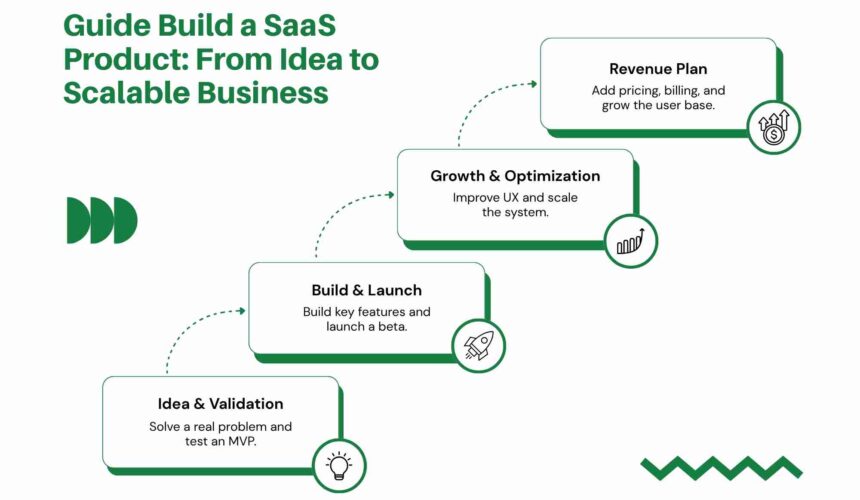
Building a software-as-a-service product is one of the most powerful ways to create a scalable and recurring revenue business. This guide build a SaaS product will walk you through the complete journey—from validating your idea to launching, growing, and scaling your SaaS successfully.
Whether you are a developer, entrepreneur, or digital strategist, understanding the right process can save you time, money, and costly mistakes.
If you want to understand how technical systems support scalable digital growth, you can explore Guide Technical SEO to see how infrastructure and optimization align in real-world applications.
What is a SaaS Product and Why It Matters
A SaaS (Software as a Service) product is a cloud-based application that users access through a subscription model instead of purchasing software outright.
Examples include tools for:
- Project management
- CRM systems
- Marketing automation
- Accounting software
The biggest advantage of SaaS is predictable recurring revenue combined with scalability. Once built, your product can serve thousands of users with minimal incremental cost.
This is why SaaS businesses often grow faster and achieve higher valuations compared to traditional business models.
Step 1: Identify a Real Problem Worth Solving
Every successful SaaS product starts with a real problem.
Why This Matters
Many founders fail because they build solutions without validating whether people actually need them.
How to Do It
Start by identifying:
- Pain points in your industry
- Repetitive tasks that can be automated
- Inefficiencies in existing tools
For example, instead of creating another generic CRM, you might build a niche CRM specifically for real estate agents or healthcare providers.
Practical Tip
Talk directly to potential users. Conduct interviews and gather feedback before writing a single line of code.
Step 2: Validate Your SaaS Idea
Validation ensures that your idea has real demand before investing time and money.
Methods to Validate
- Create a landing page explaining your product
- Offer early access or waitlist signup
- Run ads to test interest
- Collect emails and feedback
You can also build a simple MVP (Minimum Viable Product) to test functionality.
To understand how validation connects with long-term growth strategies, you can read How to Build Scalable Online Business Systems.
Step 3: Define Your Target Audience
A common mistake is trying to serve everyone.
Why Niche Focus is Important
A focused audience allows you to:
- Build better features
- Create targeted marketing
- Achieve faster traction
Example
Instead of “business owners,” target:
- E-commerce store owners
- Marketing agencies
- Freelancers
The more specific your audience, the stronger your positioning.
Step 4: Plan Your SaaS Product Features
Your first version should be simple but valuable.
Core Principle: Build Less, Deliver More
Focus on solving one main problem exceptionally well.
Example Feature Set
- User dashboard
- Core functionality
- Basic reporting
- Payment integration
Avoid feature overload in the early stage.
Step 5: Choose the Right Tech Stack
Your technology choices affect scalability, performance, and cost.
Common SaaS Tech Stack
- Frontend: React or Vue
- Backend: Node.js or Django
- Database: PostgreSQL or MongoDB
- Hosting: AWS or Vercel
For cloud infrastructure, you can explore Amazon Web Services or Google Cloud depending on your needs.
Step 6: Build a Minimum Viable Product (MVP)
An MVP allows you to launch quickly and gather real user feedback.
What to Include
- Core feature only
- Basic UI/UX
- Functional system
What to Avoid
- Complex features
- Perfect design
- Over-engineering
The goal is learning, not perfection.
Step 7: Design User Experience (UX) That Converts
A great product with poor UX will fail.
Key UX Principles
- Simple onboarding
- Clear navigation
- Fast loading speed
- Minimal friction
Tools like Figma can help design intuitive interfaces before development.
Step 8: Pricing Strategy for SaaS
Pricing can make or break your SaaS business.
Common Pricing Models
- Subscription-based (monthly/yearly)
- Freemium model
- Tiered pricing
- Usage-based pricing
Example
- Free plan with limited features
- Pro plan with advanced features
- Enterprise plan for large clients
Step 9: Launch Your SaaS Product
Your launch strategy determines early traction.
Pre-Launch
- Build an email list
- Create anticipation
- Offer early access
Launch Channels
- Product Hunt
- Social media
- Communities (Reddit, LinkedIn)
You can also align your launch with SEO strategies from Beginner to Advanced SEO Blueprint to attract organic traffic.
Step 10: Customer Acquisition Strategies
Getting users is one of the biggest challenges.
Effective Channels
- Content marketing
- SEO
- Paid ads
- Influencer partnerships
- Affiliate programs
For long-term growth, combining these strategies is essential.
Step 11: Retention and Customer Success
Acquiring users is important—but retaining them is critical.
Improve Retention By
- Providing onboarding support
- Offering tutorials and guides
- Listening to user feedback
- Continuously improving the product
Satisfied users lead to referrals and organic growth.
Step 12: Scale Your SaaS Business
Once you achieve product-market fit, focus on scaling.
Scaling Strategies
- Improve infrastructure
- Optimize performance
- Expand features
- Enter new markets
To understand how growth systems scale efficiently, you can explore Digital Marketing Strategy Guide.
Common Mistakes to Avoid
Many SaaS startups fail due to avoidable mistakes.
Building Without Validation
Overcomplicating Features
Ignoring Customer Feedback
Poor Pricing Strategy
Weak Marketing
Avoiding these mistakes significantly increases your chances of success.
Real-World SaaS Examples
Understanding successful SaaS companies helps you learn faster.
Slack
- Focused on team communication
- Simple and user-friendly
- Rapid adoption through word-of-mouth
Shopify
- Targeted e-commerce businesses
- Provided easy store setup
- Scaled globally
Notion
- Combined multiple tools into one
- Focused on productivity
- Built a strong community
Future of SaaS Business
The SaaS industry is evolving rapidly.
Trends to Watch
- AI-powered SaaS
- No-code and low-code platforms
- Vertical SaaS (niche markets)
- Automation-driven products
Businesses that adapt to these trends will dominate the market.
Final Thoughts
This guide build a SaaS product provides a complete roadmap—from idea validation to scaling your business.
The key is to focus on solving real problems, building simple solutions, and continuously improving based on user feedback.
Start small, move fast, and build a system that can scale.